



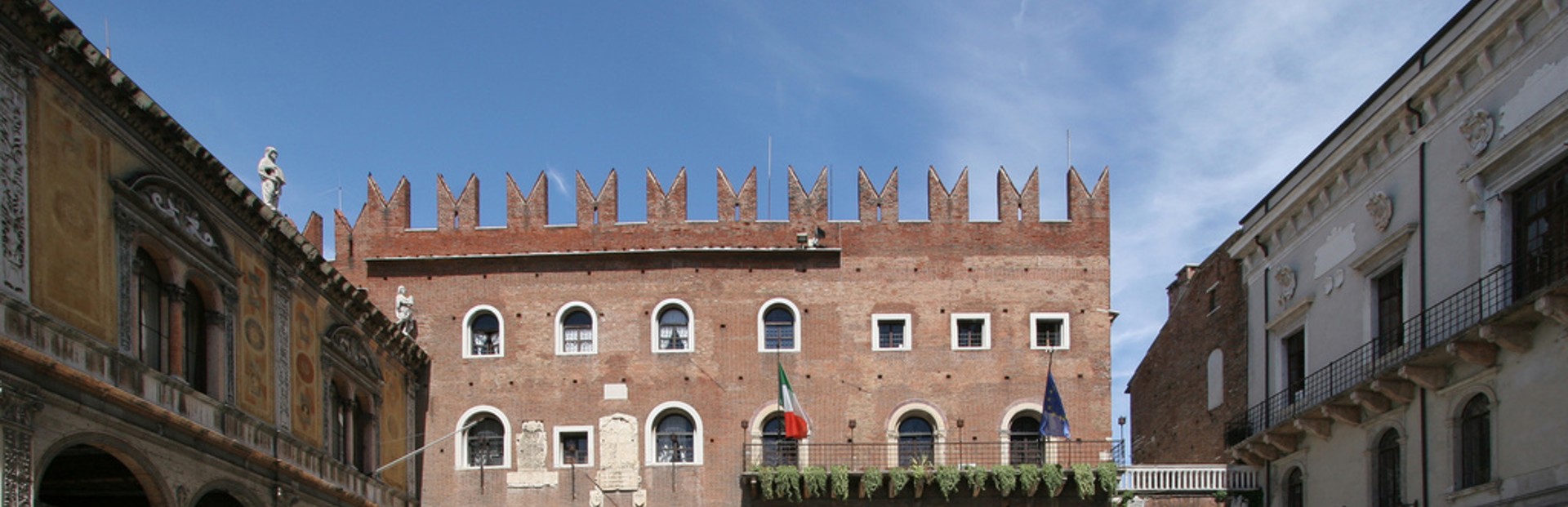
Abstract Verona under the Scaligeri is the medieval city at the height of its splendor. This tour traces the glorious yet sometimes murky history of the Lords of Verona through the places where they lived and ruled, such as Piazza dei Signori and Castelvecchio. But we will also see the places of trade, such as Corte Sgarzerie and Piazza delle Erbe, as well as those of faith, such as Santa Anastasia, and the Scaligeri Tombs where they are buried. Tour duration: 2 hours Price: from €140 |
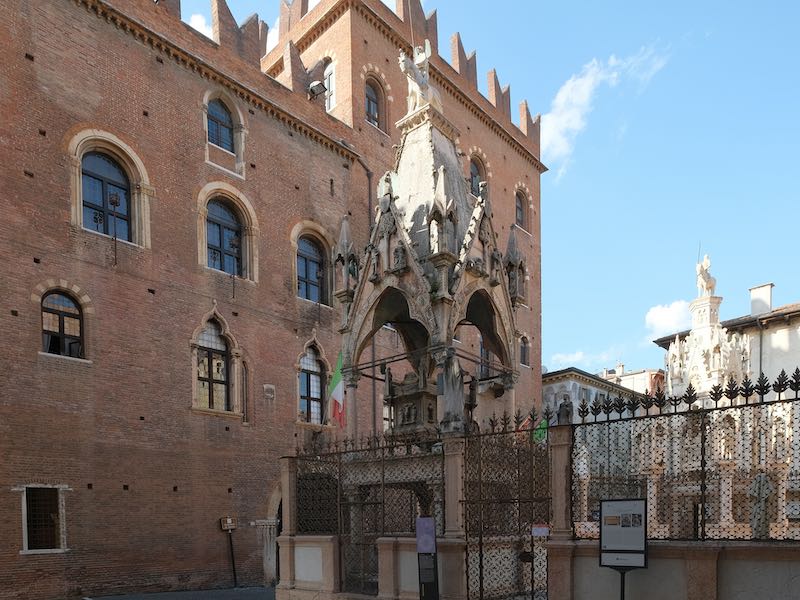
For learn more: Why is Verona called the “Scaligeri city”?
The Scaligeri – an adjective used to describe the Della Scala family—have been compared to the Medici family: merchant origins, political shrewdness, and patronage of the arts.
Their political vision for Verona was ahead of its time in 14th-century Italy, but the Scaligeri’s journey, though glorious, was fraught with complications.
Five generations of lords, the most important of whom was Cangrande, had to navigate ancient feuds, personal ambitions, politics, conspiracies, murky affairs, and glorious moments within the palaces they built and surrounded by the artists they protected.
Scaligeri Verona thus reflects the history, events, and political and social choices of one of the most powerful families of the era.
The picture can only be one of light and shadow, because the reasons behind their choices, and the political and family dynamics, are at times incomprehensible and brutal to us modern readers.
In any case, the Della Scala family helped shape Verona’s identity and left the city a historical legacy that deserves to be discovered by immersing oneself in the minds of the lords who ruled it.
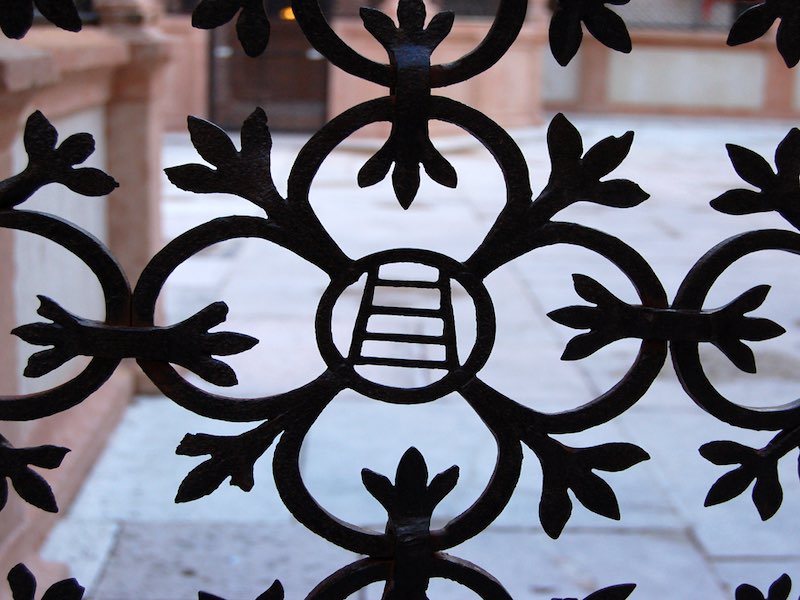
To learn more: What are the “Arche Scaligere”?
Verona’s history during the Scaligeri era is reflected in an extraordinary monument: the funerary complex of the Arche Scaligere.
Once they had consolidated their rule over the city, the Scaligeri family built several palaces for the court and the family itself, which stood alongside the palace in Piazza dei Signori, which served as their “official” residence.
The family cemetery was, at the time, the courtyard of the small church of Santa Maria Antica, which housed the graves of the early lords such as Mastino, Alberto and Bartolomeo.
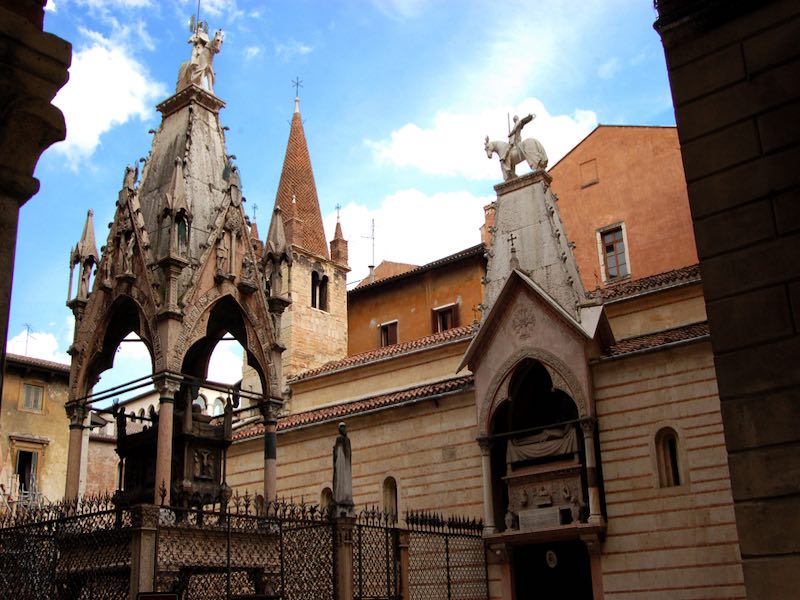
But with the rise of Cangrande, the family cemetery began to take shape as the extraordinary monument of Gothic architecture that today enchants visitors to the city: the Arche Scaligere.
It is a true mausoleum, which the city’s ruling lords chose to build in order to preserve a fitting memorial to its political and military achievements.