



Abstract For hundreds of years, Shakespeare’s tragedy Romeo and Juliet has captured the hearts of people all over the world and has itself become a symbol of love that transcends all barriers, even at the cost of a tragic ending. In the collective imagination, Verona is Juliet, a romantic heroine who is fragile, naive, and courageous all at once. The imagination of Bandello and Da Porto, the poetry of Shakespeare, popular tradition, and Italian and international cinema have turned a fictional character into a friend to reconnect with and to whom one can write letters to confide the secrets of love… Duration: 2 hours Price: from €140 (museum admission not included) |
To learn more: Juliet’s House
We are on what is now Via Cappello, the city’s ancient Roman cardo, in a medieval house that welcomes travelers with panels covered in love notes, romantic messages, and symbolic objects. This is the “entrance hall of love,” which opens onto the courtyard of the house-museum and has, over the years, become a place of pilgrimage for lovers from all over the world.

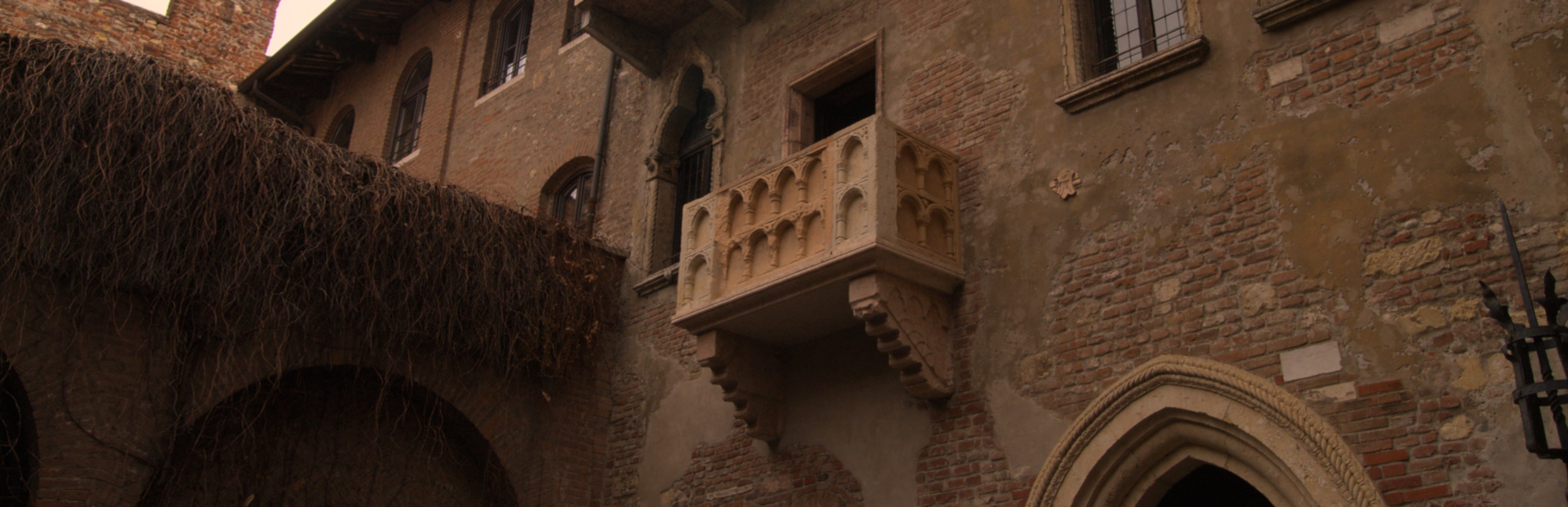
The courtyard immediately reveals Juliet’s famous balcony, a spot that invites visitors to imagine the young woman pining for love on nights softly lit by the moon.
The magic is undeniable, but it’s worth remembering that this was the home of the Dal Cappello family—a name that echoes the Capulet surname—though there is no historical certainty that this was actually Juliet’s home.
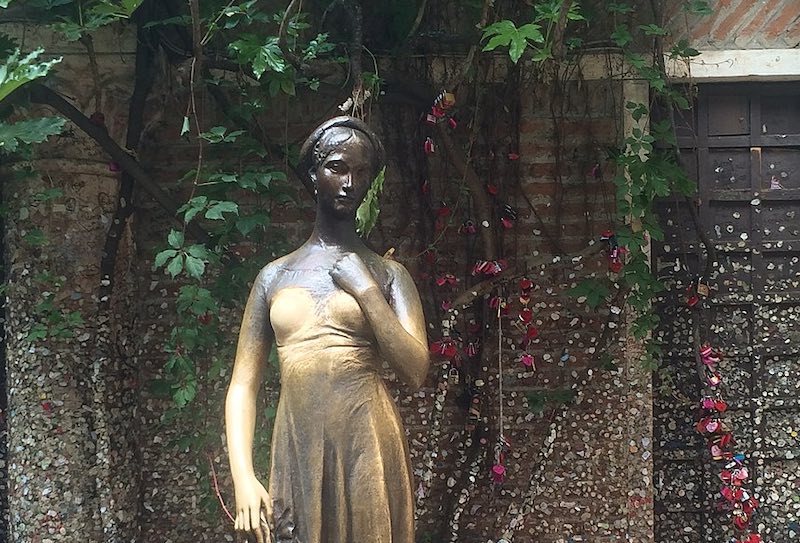
The site is, in any case, one of the symbols of romantic Verona, thanks in part to the bronze statue of Juliet located in the courtyard. Touching the statue’s breast is said to bring good luck to lovers, which is why a visit to Juliet’s House is one of the most intriguing stops on a tour of romantic Verona.
The power of the tragedy and its reinterpretation in every art form have made it a symbol of the most powerful of emotions, Love, which Verona celebrates through its protagonists, but also through its beauty as an eternal city.
Pictures: Marcel Heil from Unsplash