


Abstract Anyone looking for tours of Roman Verona will certainly not be disappointed by a city that has often been compared to Rome itself due to the clear traces of its ancient past, which today coexist in a unique dialogue with the present and everyday life. A tour of Roman Verona winds through its iconic sites, from the Arena Amphitheater to the Roman Theater, leading to the discovery of historical landmarks such as the Arco dei Gavi, the ancient Via Postumia, and the Ponte Pietra. The Roman legacy will amaze us in its urban planning and in the references ‘scattered’ throughout the city, ready to be discovered little by little on a tour of great historical and cultural charm. Come discover it with us! Tour duration: 2 hours Price: starting at €140 |
To learn more: the Arena of Verona
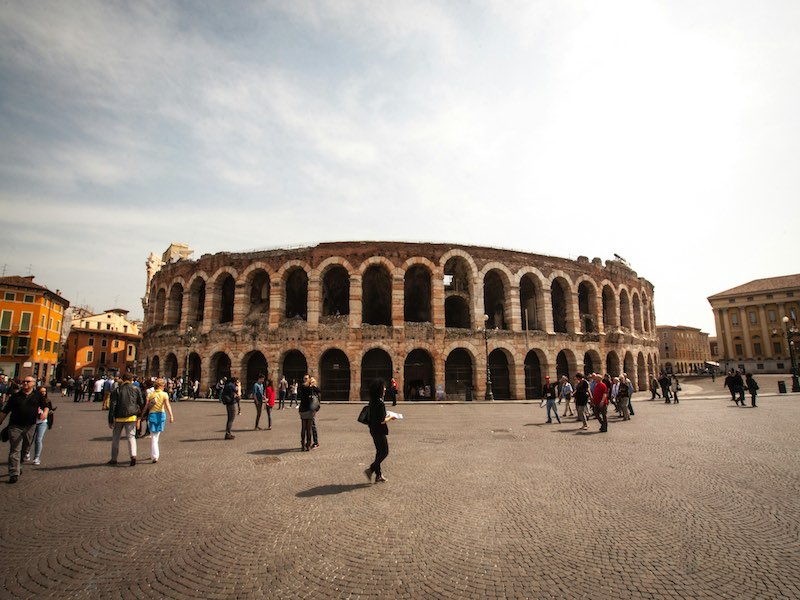
The Arena amphitheater is undoubtedly Verona’s most famous landmark: its imposing structure dominates the skyline of the city’s main square, and events of international significance are still held there today.
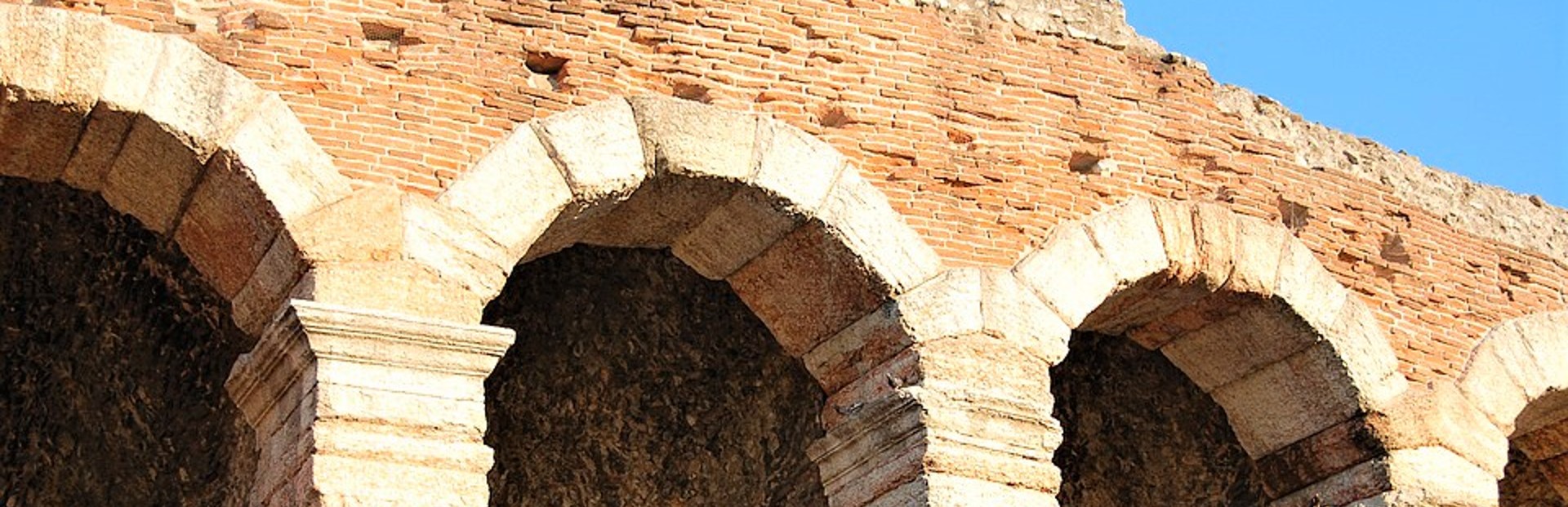
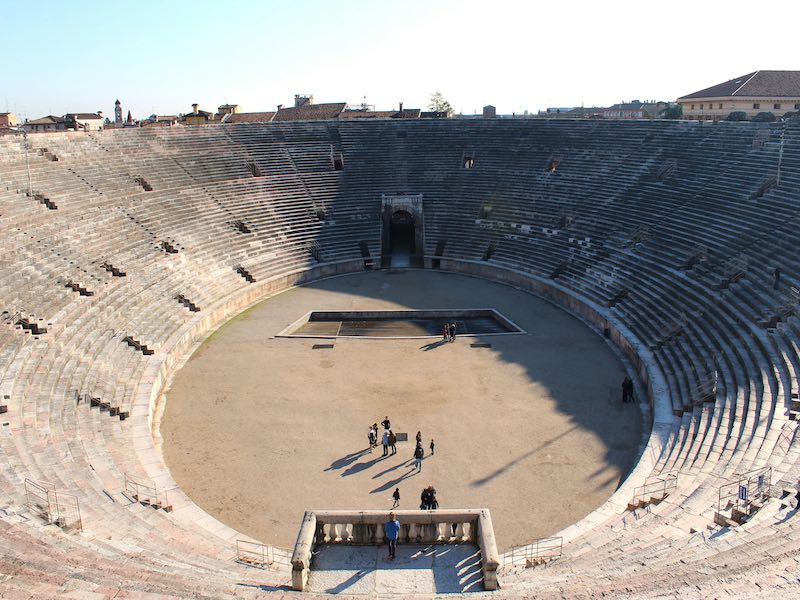
Built in the 1st century AD during the reigns of Augustus and later Emperor Claudius, the Arena was originally designed as a venue for bloody gladiatorial contests, including spectacles featuring ferocious wild beasts. It has an elliptical shape, and the local stone used in its construction gives the walls their distinctive pinkish-red hue.
This building reaches a height of 30 meters at its highest point, with an exterior wall featuring four arches and another 72 arches visible from the outside. There are 64 entrances and exits designed to allow the public to enter and exit, while inside, the Arena features 45 tiers of seating, making it a monumental structure that today has a capacity of up to 25,000 people.
To learn more: the ancient Theater of Verona
Overlooking the Adige River, which is still spanned by the Ponte Pietra, the Roman Theater rises up the hill of San Pietro, a sacred site even before the arrival of the Romans.
Over the centuries, this site was “covered” by buildings of all kinds, from houses to churches, including a monastery. It was Andrea Monga, a doctor with a passion for archaeology, who spearheaded the initial excavations that brought this site of immense historical importance to light.
Today, the theater can be included in tours of Roman Verona – both as a site to visit and as a unique venue for performances held in the city, ranging from plays to jazz concerts.
Pictures by Alberto Bigoni on Unsplash, by Christian Burri on Unsplash, and by Rui Alves on Unsplash